GeeGitMEDIA

GeeGit Explains · Antariksa India (ISRO)

Mesin roket kriogenik India: teknologi yang dilarang dijual

India's cryogenic engine: the rocket engine India couldn't buy

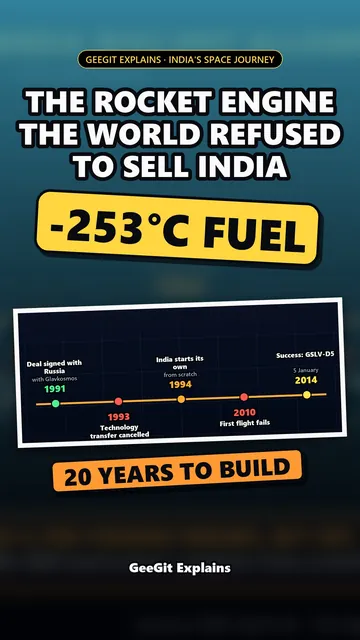
Tahun 1993 transfer teknologi mesin kriogenik dari Rusia batal karena sanksi AS. India membangun sendiri dari nol, gagal tahun 2010, dan berhasil 5 Januari 2014. Hidrogen cair -253°C, Isp sekitar sepertiga lebih tinggi dari kerosin.

Sampul short: India's cryogenic engine: the rocket engine India couldn't buy

Short-nya segera tayang di YouTube @geegit

Penjelasannya

Pada 1991, India meneken kesepakatan membeli teknologi mesin roket kriogenik dari Rusia. Dua tahun kemudian, di bawah sanksi Amerika terkait aturan rudal, transfer teknologinya dibatalkan. Rusia tetap mengirim beberapa mesin jadi, tetapi tidak dengan ilmunya.

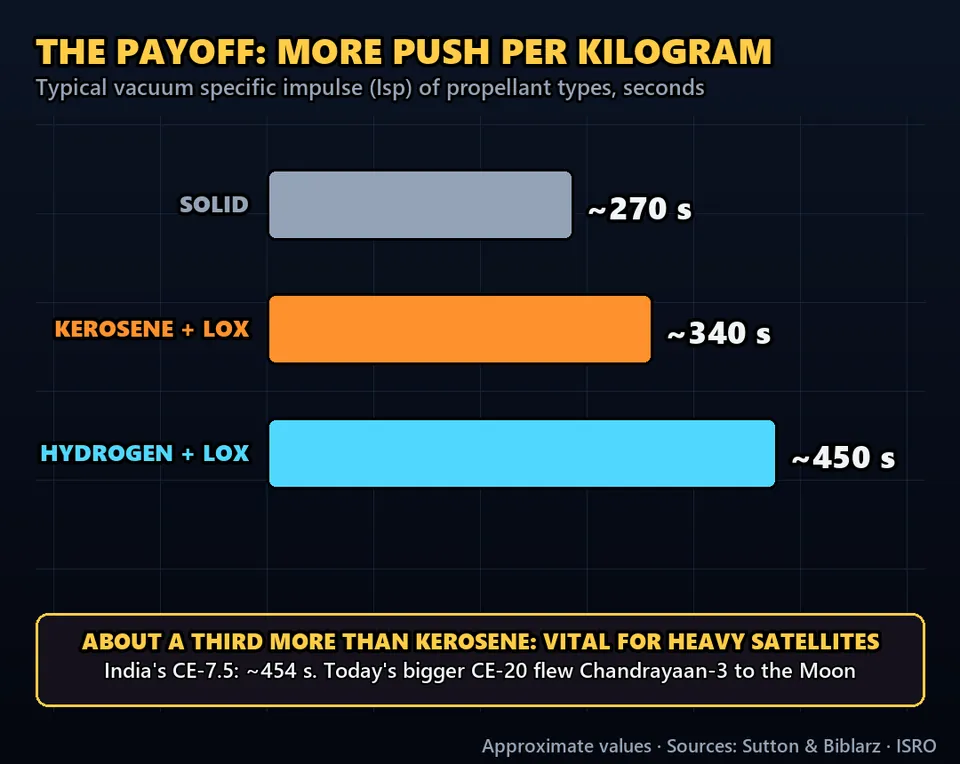
Mesin ini membakar hidrogen cair bersuhu -253°C dengan oksigen cair bersuhu -183°C. Logam menjadi getas, hidrogen bocor lewat celah sekecil apa pun, dan pompanya berputar puluhan ribu rpm. Imbalannya: dorongan per kilogram propelan sekitar sepertiga lebih tinggi dari kerosin, penting untuk satelit berat.

India memulai dari nol pada 1994. Penerbangan pertamanya, pada 2010, gagal. Pada 5 Januari 2014, mesin buatan sendiri itu akhirnya berhasil. Kini mesin kriogenik India yang lebih besar ikut mengantar Chandrayaan-3 ke Bulan.
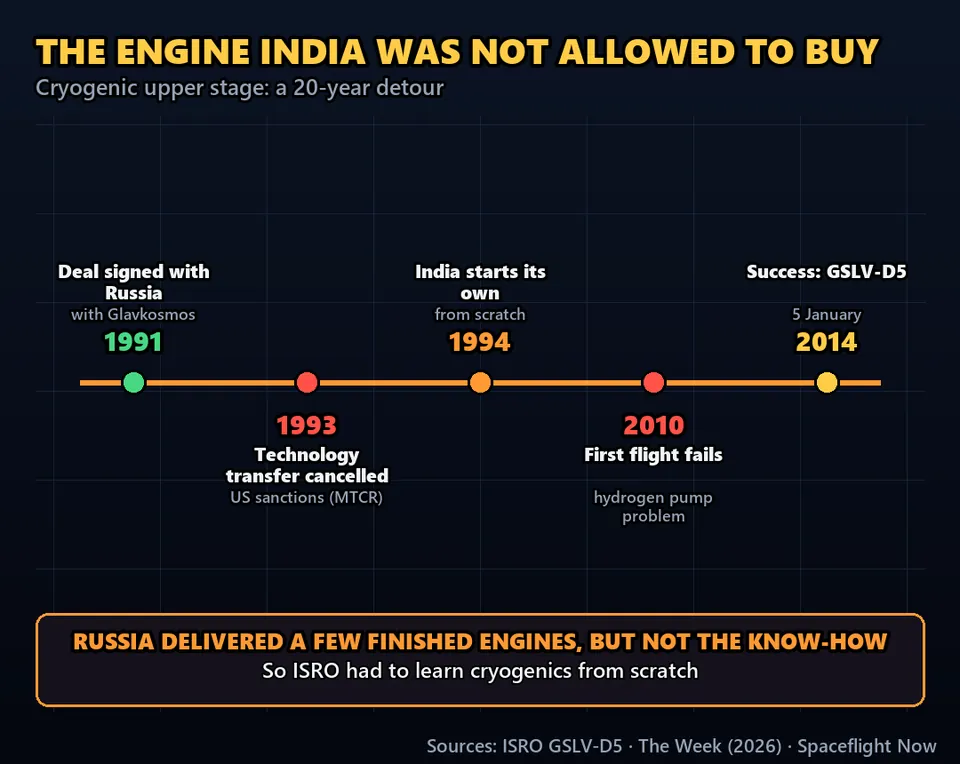
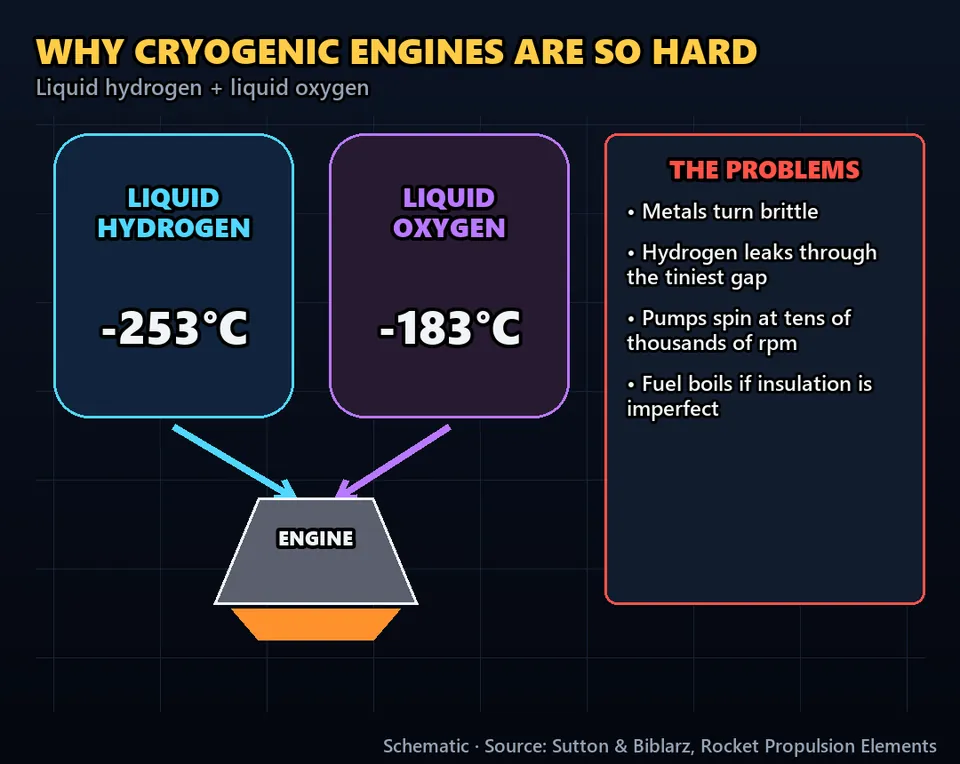
Diagram dari video

Diagram GeeGit: In 1991, India signed a deal to buy cryogenic rocket engine technology from Russia.
“In 1991, India signed a deal to buy cryogenic rocket engine technology from Russia.”
Diagram GeeGit: These engines burn liquid hydrogen at minus two hundred fifty-three degrees, with liquid oxygen at minus one hundred eighty-three.
“These engines burn liquid hydrogen at minus two hundred fifty-three degrees, with liquid oxygen at minus one hundred eighty-three.”
Diagram GeeGit: The payoff: about a third more push per kilogram of propellant than kerosene, vital for heavy satellites.
“The payoff: about a third more push per kilogram of propellant than kerosene, vital for heavy satellites.”
Transkrip video (English)

In 1991, India signed a deal to buy cryogenic rocket engine technology from Russia.

Two years later, under American sanctions over missile rules, the technology transfer was cancelled.

Russia delivered a few finished engines, but not the know-how.

These engines burn liquid hydrogen at minus two hundred fifty-three degrees, with liquid oxygen at minus one hundred eighty-three.

Metals turn brittle, hydrogen leaks through the tiniest gap, and pumps spin at tens of thousands of rpm.

The payoff: about a third more push per kilogram of propellant than kerosene, vital for heavy satellites.

India started from scratch in 1994. Its first flight, in 2010, failed.

On January 5, 2014, it finally worked. Today a bigger Indian cryogenic engine carried Chandrayaan-3 toward the Moon.

Sumber

  • ISRO GSLV-D5
  • Spaceflight Now
  • Sutton, Rocket Propulsion Elements

Diagram digambar ulang dan disederhanakan oleh GeeGit. Narasi video: suara AI.

Masih soal Antariksa India (ISRO)

Pertanyaan baru setiap hari