GeeGitMEDIA

GeeGit Explains · Antariksa India (ISRO)

Chandrayaan-3: kenapa India mendarat di kutub selatan Bulan?

Chandrayaan-3 south pole landing: why the south pole?

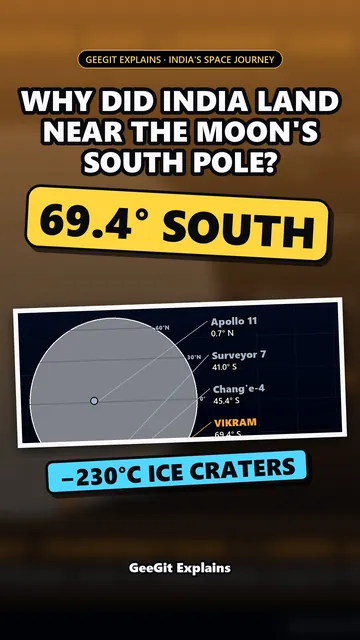
Kawah di kutub selatan Bulan tak pernah kena matahari dan suhunya di bawah -230°C, sehingga bisa menyimpan es air: air minum, oksigen, dan bahan bakar roket untuk misi masa depan.

Sampul short: Chandrayaan-3 south pole landing: why the south pole?

Short-nya segera tayang di YouTube @geegit

Penjelasannya

Pada 23 Agustus 2023, wahana pendarat Vikram milik India mendarat lebih dekat ke kutub selatan Bulan daripada pendarat mana pun sebelumnya. Empat hari sebelumnya, Luna-25 milik Rusia jatuh saat mencoba mencapai wilayah yang sama.

Kenapa ke sana? Di kutub, Matahari hanya menyapu cakrawala, sehingga sebagian kawah dalam tidak pernah terkena sinar. Dasarnya tetap di bawah -230°C, cukup dingin untuk menyimpan es air selama miliaran tahun. Pada 2009, instrumen di wahana Bulan pertama India, Chandrayaan-1, ikut membantu mendeteksi air di permukaan Bulan.

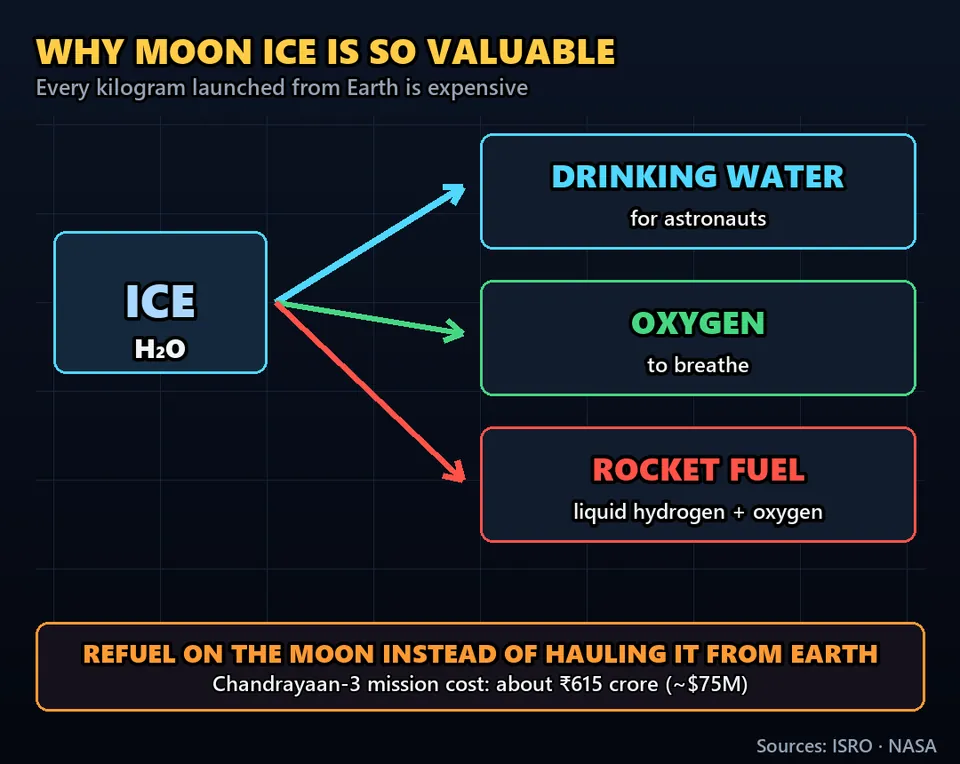
Es berarti air minum, oksigen untuk bernapas, serta hidrogen dan oksigen untuk bahan bakar roket. Siapa yang bisa memanfaatkannya bisa mengisi bahan bakar di Bulan alih-alih mengangkut semuanya dari Bumi. India sampai di sana lebih dulu, dengan biaya sekitar 75 juta dolar.
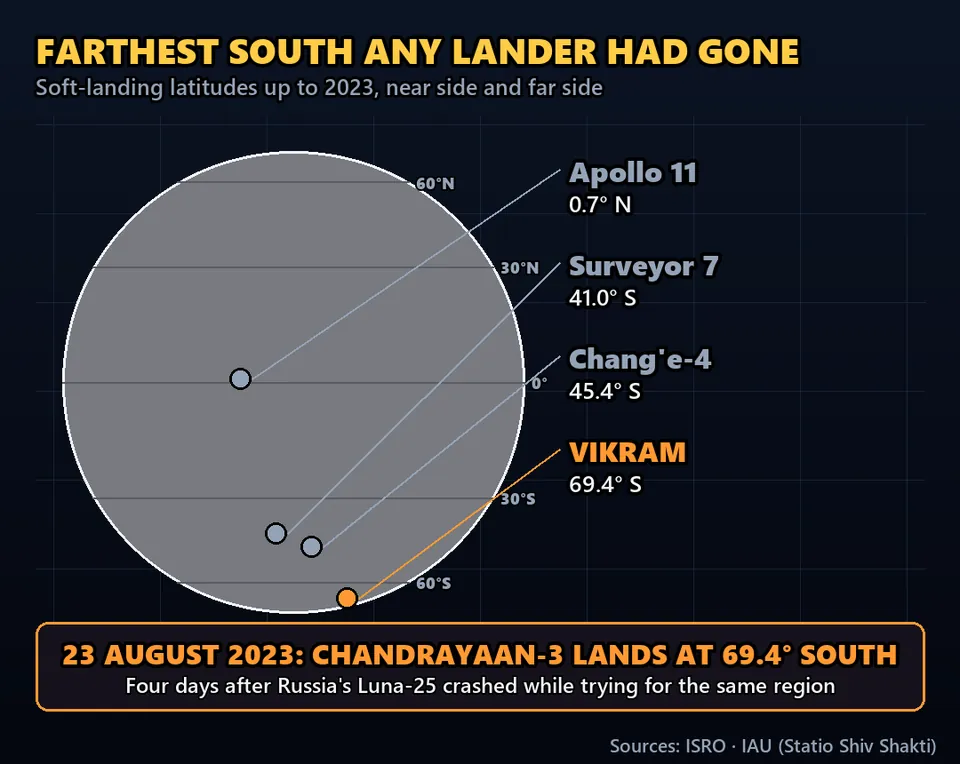
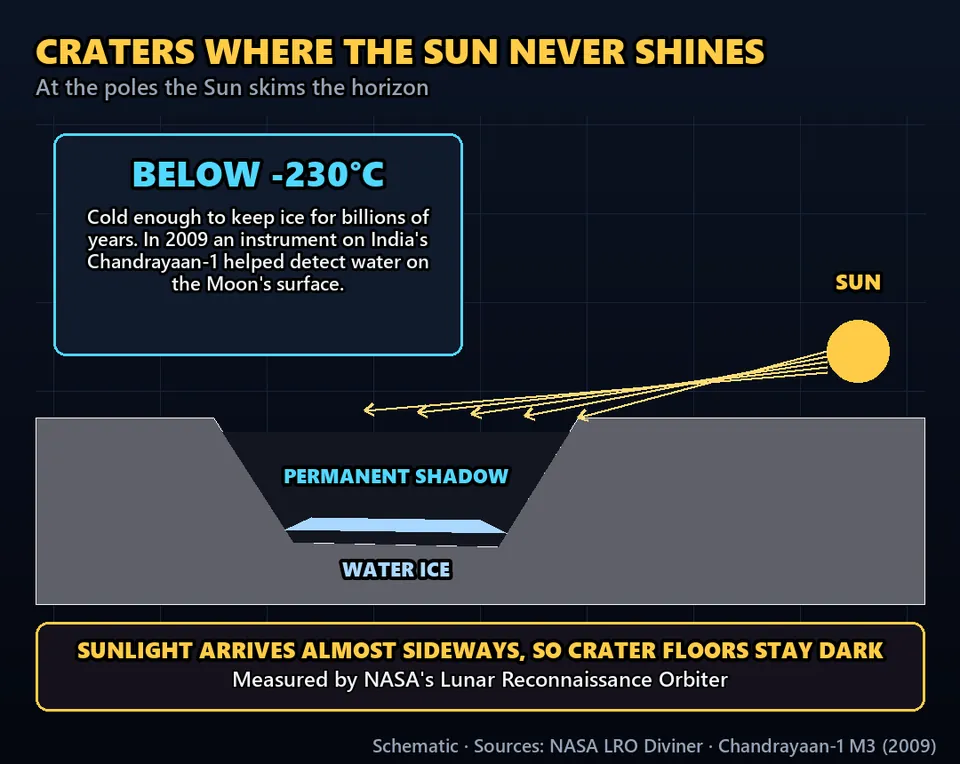
Diagram dari video

Diagram GeeGit: On August 23, 2023, India's Vikram lander touched down closer to the Moon's south pole than any lander before.
“On August 23, 2023, India's Vikram lander touched down closer to the Moon's south pole than any lander before.”
Diagram GeeGit: Why go there? At the poles, the Sun skims the horizon, so some deep craters never see daylight.
“Why go there? At the poles, the Sun skims the horizon, so some deep craters never see daylight.”
Diagram GeeGit: Ice means drinking water, oxygen to breathe, and hydrogen and oxygen for rocket fuel.
“Ice means drinking water, oxygen to breathe, and hydrogen and oxygen for rocket fuel.”
Transkrip video (English)

On August 23, 2023, India's Vikram lander touched down closer to the Moon's south pole than any lander before.

Four days earlier, Russia's Luna 25 had crashed trying to reach the same region.

Why go there? At the poles, the Sun skims the horizon, so some deep craters never see daylight.

Their floors stay below minus two hundred thirty degrees Celsius, cold enough to keep water ice for billions of years.

In 2009, an instrument on India's first Moon mission helped detect water on the lunar surface.

Ice means drinking water, oxygen to breathe, and hydrogen and oxygen for rocket fuel.

Whoever learns to use it could refuel on the Moon, instead of hauling everything from Earth.

India got there first, for about seventy-five million dollars.

Sumber

  • ISRO Chandrayaan-3
  • IAU
  • NASA LRO

Diagram digambar ulang dan disederhanakan oleh GeeGit. Narasi video: suara AI.

Masih soal Antariksa India (ISRO)

Pertanyaan baru setiap hari