GeeGitMEDIA

GeeGit Explains · Sains

Kenapa demam berdarah melonjak saat musim hujan?

Why does dengue spike in the rainy season?

Telur nyamuk Aedes bisa bertahan kering berbulan-bulan dan menetas begitu terendam air hujan. Kasus DBD biasanya naik 2-4 minggu sesudah hujan pertama.

Sampul short: Why does dengue spike in the rainy season?

Short-nya segera tayang di YouTube @geegit

Penjelasannya

Begitu musim kemarau berakhir dan hujan turun, kasus demam berdarah tidak sekadar naik, tetapi melonjak. Banyak orang mengira hujan membawa nyamuk. Padahal rahasianya sudah lama menunggu di halaman rumah.

Telur nyamuk Aedes bisa kering total dan bertahan di dinding pot kosong atau ban bekas sampai sembilan bulan. Begitu air hujan mengisi wadah itu, jutaan telur yang "tidur" kembali basah dan menetas dalam hitungan jam. Udara tropis yang hangat dan lembap mempercepat pertumbuhannya, sehingga jentik menjadi nyamuk dewasa yang menggigit dalam sekitar seminggu.

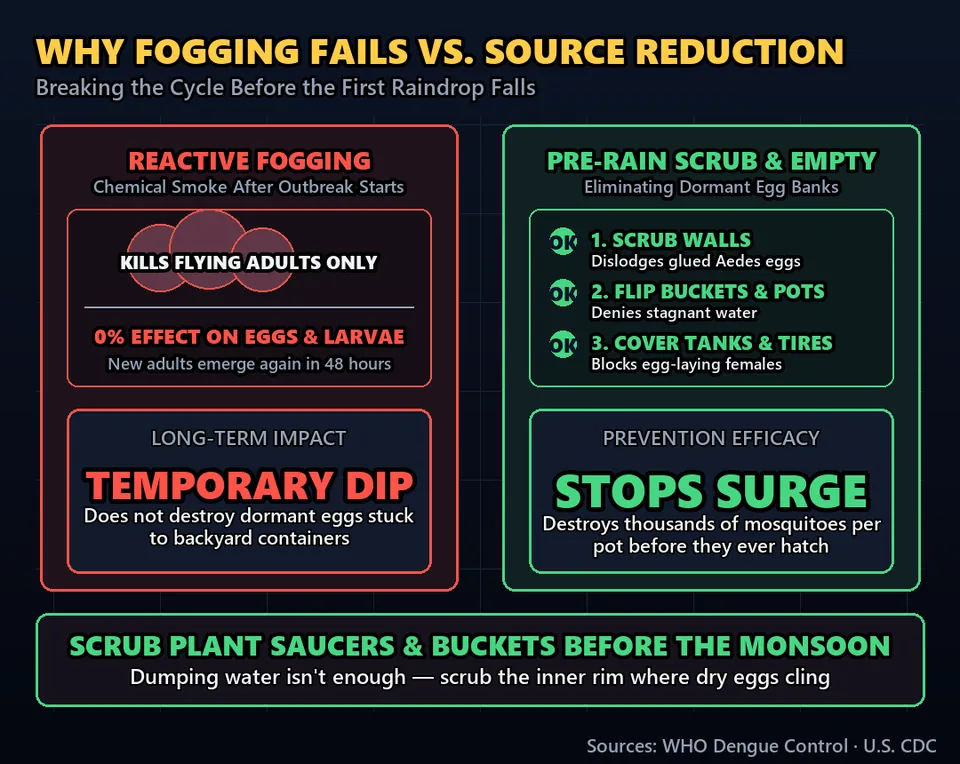
Itulah sebabnya bangsal rumah sakit sering penuh dua sampai empat minggu setelah hujan lebat pertama. Pertahanan terbaik bukan asap fogging, melainkan menguras setiap tatakan dan wadah air sebelum hujan datang.
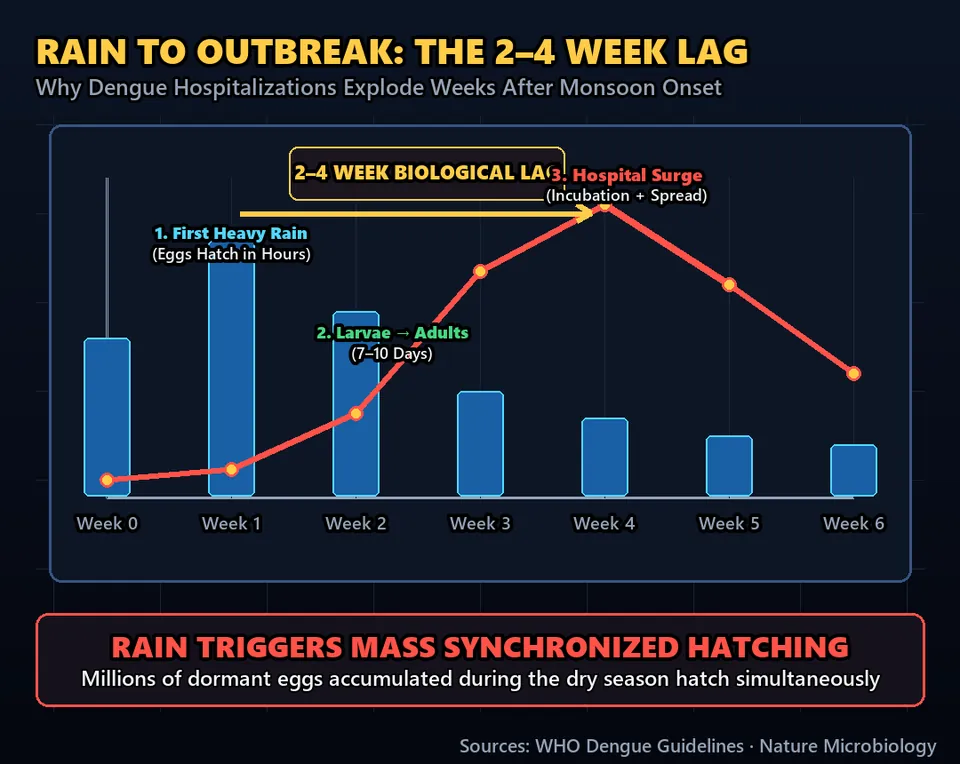
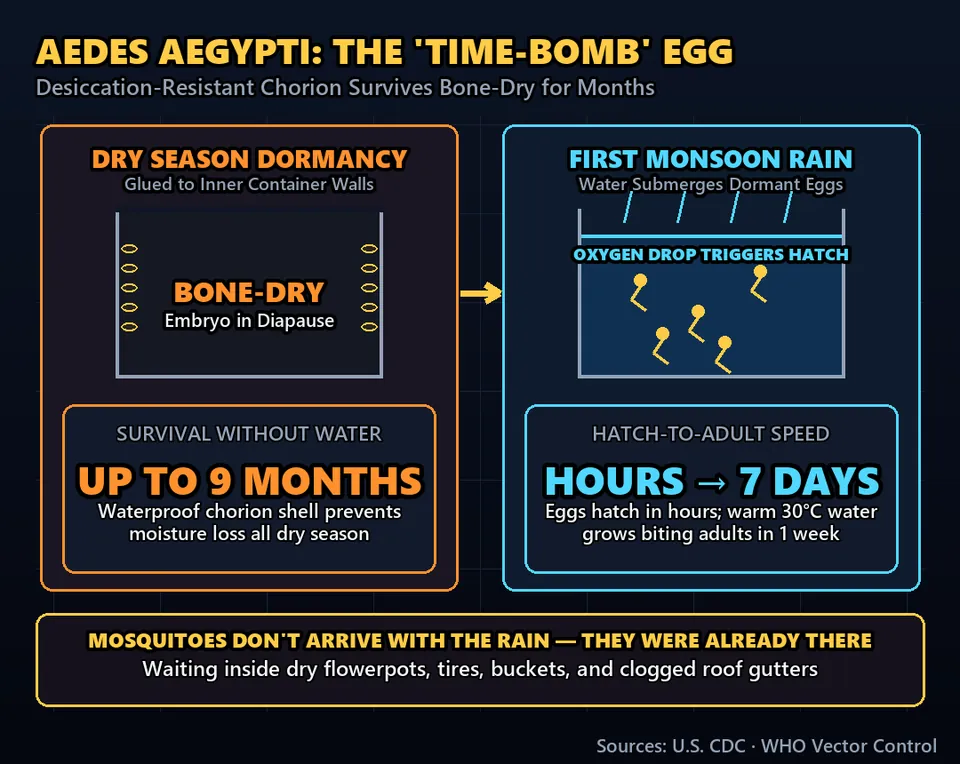
Diagram dari video

Diagram GeeGit: When the dry season ends and monsoon rains hit, dengue fever cases don't just climb: they explode.
“When the dry season ends and monsoon rains hit, dengue fever cases don't just climb: they explode.”
Diagram GeeGit: Most people think rain brings the mosquitoes. But the secret was already waiting in your backyard.
“Most people think rain brings the mosquitoes. But the secret was already waiting in your backyard.”
Diagram GeeGit: The best defence isn't fogging smoke. It's emptying every single saucer before the rain even starts.
“The best defence isn't fogging smoke. It's emptying every single saucer before the rain even starts.”
Transkrip video (English)

When the dry season ends and monsoon rains hit, dengue fever cases don't just climb: they explode.

Most people think rain brings the mosquitoes. But the secret was already waiting in your backyard.

Aedes mosquito eggs can dry out completely and survive on the walls of empty pots or old tires for up to nine months.

The moment rainwater fills those containers, millions of sleeping eggs rehydrate and hatch in just hours.

Warm tropical humidity accelerates their growth, turning larvae into biting adults in barely a week.

That is why hospital wards often fill up two to four weeks after the first heavy storms.

The best defence isn't fogging smoke. It's emptying every single saucer before the rain even starts.

Sumber

  • WHO Dengue Guidelines
  • U.S. CDC

Diagram digambar ulang dan disederhanakan oleh GeeGit. Narasi video: suara AI.

Masih soal Sains

Pertanyaan baru setiap hari