GeeGitMEDIA

GeeGit Explains · Pikiran & Tubuh

Kenapa kita suka menunda pekerjaan? Bukan karena malas

Why do we procrastinate? (It's not laziness)

Menunda adalah cara otak menghindari rasa tidak nyaman, bukan soal manajemen waktu. Mulailah dengan satu langkah kecil yang jelek pun tak apa.

Sampul short: Why do we procrastinate? (It's not laziness)

Short-nya segera tayang di YouTube @geegit

Penjelasannya

Tenggat sudah dekat dan kamu tahu akibatnya, tetapi malah tenggelam tiga jam di internet. Orang menyebutnya malas. Ahli saraf menyebutnya hal lain: kepanikan emosional.

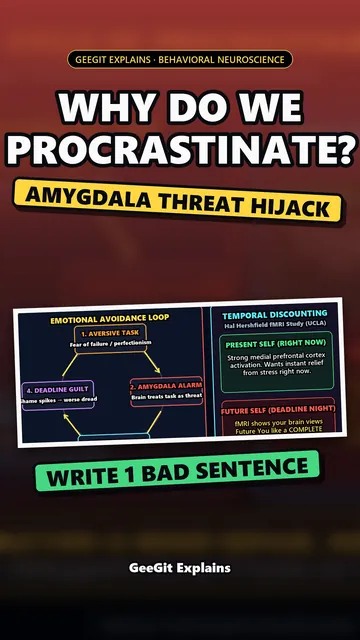
Menunda pekerjaan bukan soal manajemen waktu, melainkan pengaturan emosi. Ketika sebuah tugas memicu takut gagal, bingung, atau cemas ingin sempurna, amigdala memperlakukannya seperti ancaman nyata. Untuk melindungimu dari perasaan buruk saat itu juga, otak kabur ke dopamin instan: merapikan meja atau scroll video.

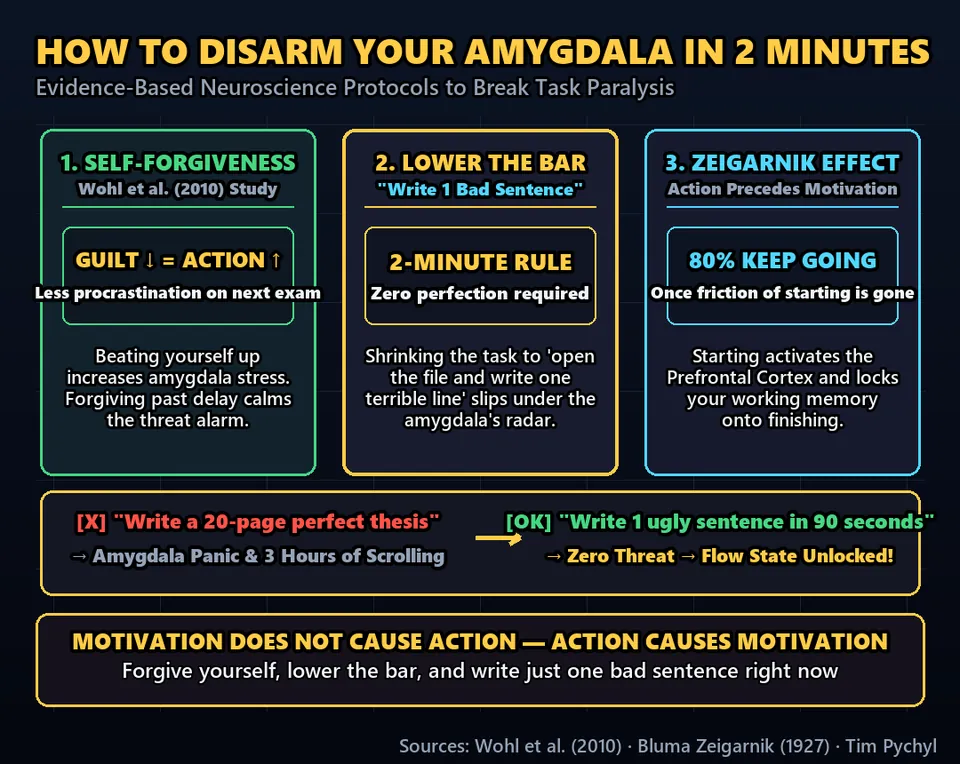
Lewat temporal discounting, pikiran memperlakukan dirimu di malam tenggat seperti orang asing yang nanti saja menanggung stresnya. Untuk berhenti menunda, kamu tidak butuh kalender yang lebih bagus. Maafkan diri sendiri, turunkan standar, dan tulis saja satu kalimat jelek dulu.
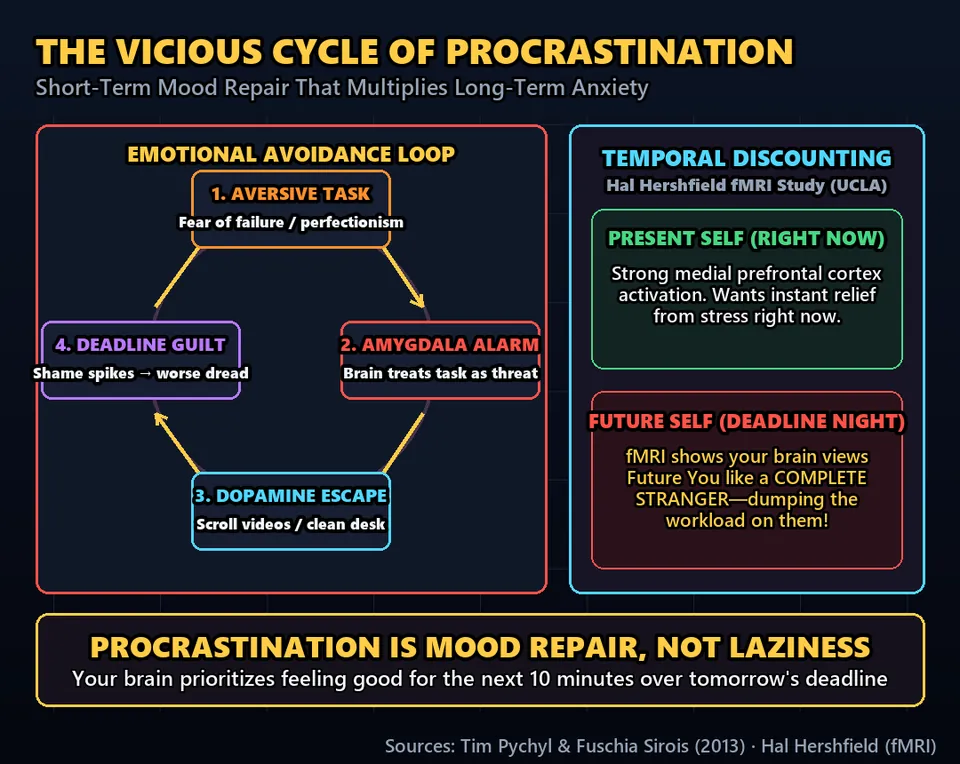
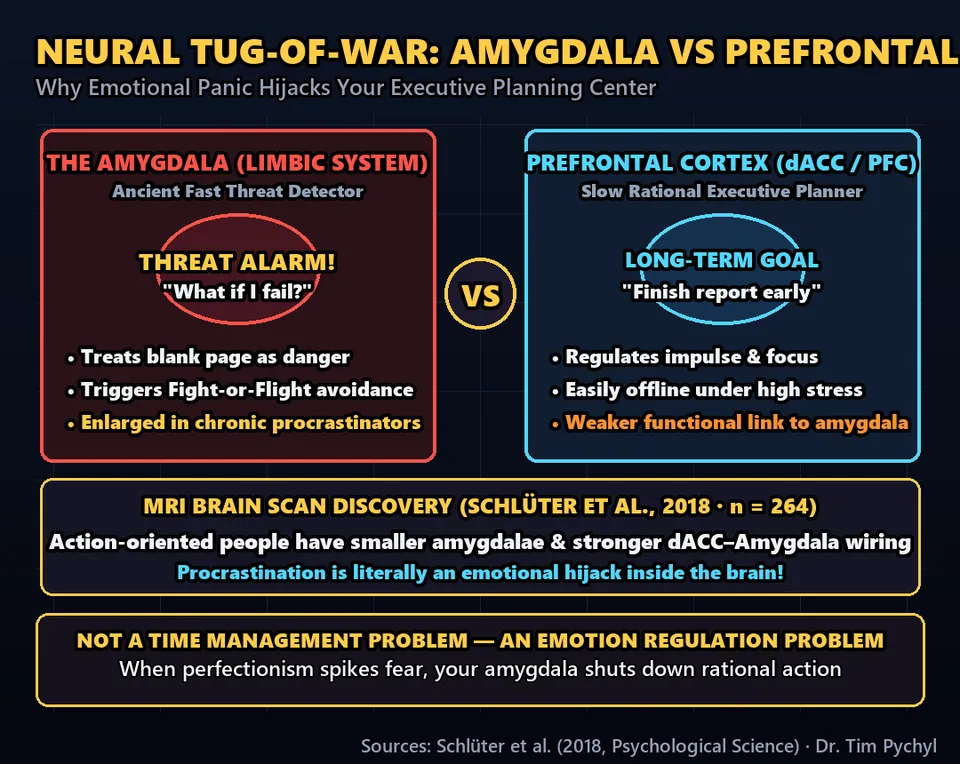
Diagram dari video

Diagram GeeGit: You have an urgent deadline. You know the consequences. Yet you find yourself deep in a random three-hour internet rabbit hole.
“You have an urgent deadline. You know the consequences. Yet you find yourself deep in a random three-hour internet rabbit hole.”
Diagram GeeGit: Society calls it laziness. Neuroscientists call it something completely different: emotional panic.
“Society calls it laziness. Neuroscientists call it something completely different: emotional panic.”
Diagram GeeGit: You don't need a better calendar to stop procrastinating. You need to forgive yourself, lower the bar, and just write one bad sentence.
“You don't need a better calendar to stop procrastinating. You need to forgive yourself, lower the bar, and just write one bad sentence.”
Transkrip video (English)

You have an urgent deadline. You know the consequences. Yet you find yourself deep in a random three-hour internet rabbit hole.

Society calls it laziness. Neuroscientists call it something completely different: emotional panic.

Procrastination is not a time management flaw. It is an emotional regulation problem.

When a task triggers fear of failure, confusion, or perfectionist anxiety, your amygdala treats it like an actual threat.

To protect you from those negative feelings right now, your brain flees to instant dopamine: cleaning your desk or scrolling videos.

Through cognitive temporal discounting, your mind treats your future self on deadline night like a complete stranger who can deal with the stress.

You don't need a better calendar to stop procrastinating. You need to forgive yourself, lower the bar, and just write one bad sentence.

Sumber

  • Dr. Tim Pychyl
  • Dr. Fuschia Sirois
  • Psychological Science

Diagram digambar ulang dan disederhanakan oleh GeeGit. Narasi video: suara AI.

Masih soal Pikiran & Tubuh

Pertanyaan baru setiap hari