GeeGitMEDIA

GeeGit Explains · Sejarah & Bahasa

Asal kata 'OK': lelucon koran tahun 1839

Where does 'OK' come from? An 1839 newspaper joke

'OK' pertama kali tercetak di Boston Morning Post 23 Maret 1839 sebagai singkatan plesetan 'oll korrect', lalu populer lewat kampanye presiden 1840.

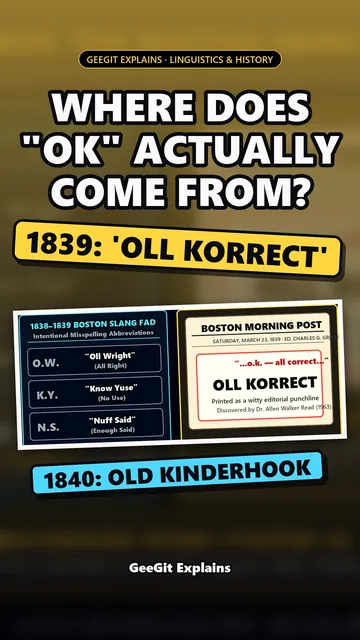
Sampul short: Where does 'OK' come from? An 1839 newspaper joke

Short-nya segera tayang di YouTube @geegit

Penjelasannya

"OK" adalah kata yang paling banyak diucapkan dan dipahami di seluruh dunia. Padahal awalnya ia lelucon ejaan yang disengaja.

Akhir 1830-an, penulis muda di koran-koran Boston punya tren konyol menyingkat kata yang sengaja salah eja. Pada 23 Maret 1839, Boston Morning Post mencetak "O.K." sebagai singkatan "oll korrect", plesetan dari all correct. Lelucon semacam itu biasanya cepat dilupakan.

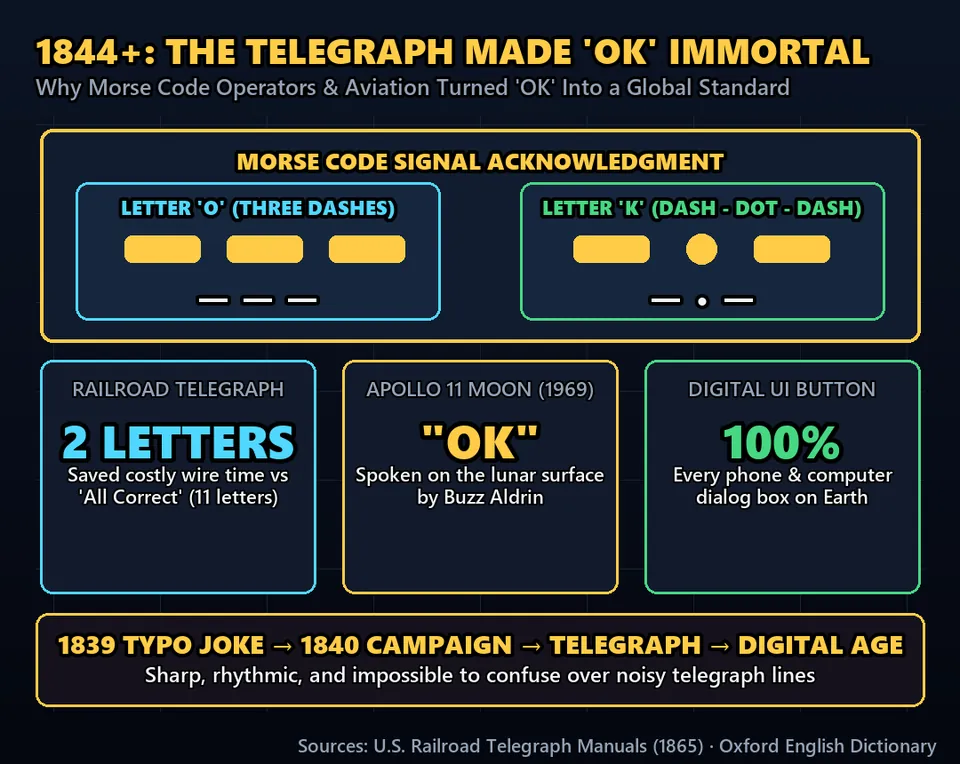
Tetapi setahun kemudian, sebuah kampanye presiden AS memakainya. Pendukung Presiden Martin Van Buren menjulukinya "Old Kinderhook" dan menyerukan "Vote for OK!". Lalu datang telegraf listrik: operator butuh konfirmasi singkat dan jelas bahwa pesan sudah diterima. Lelucon koran abad ke-19 yang menjadi slang politik, lalu menaklukkan komunikasi manusia.
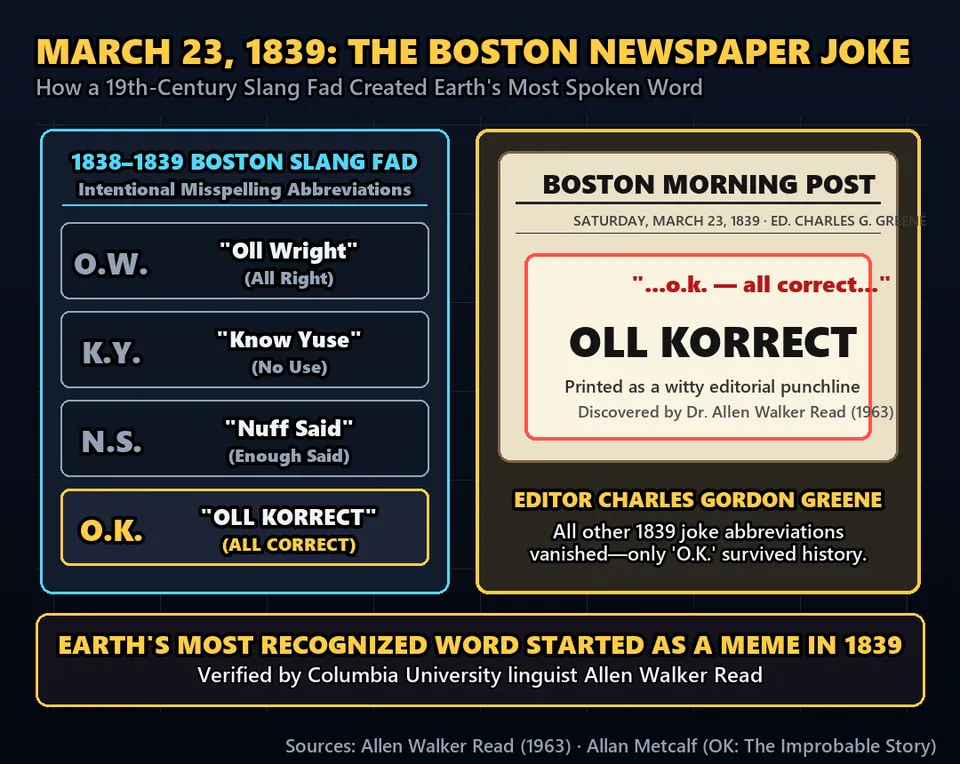
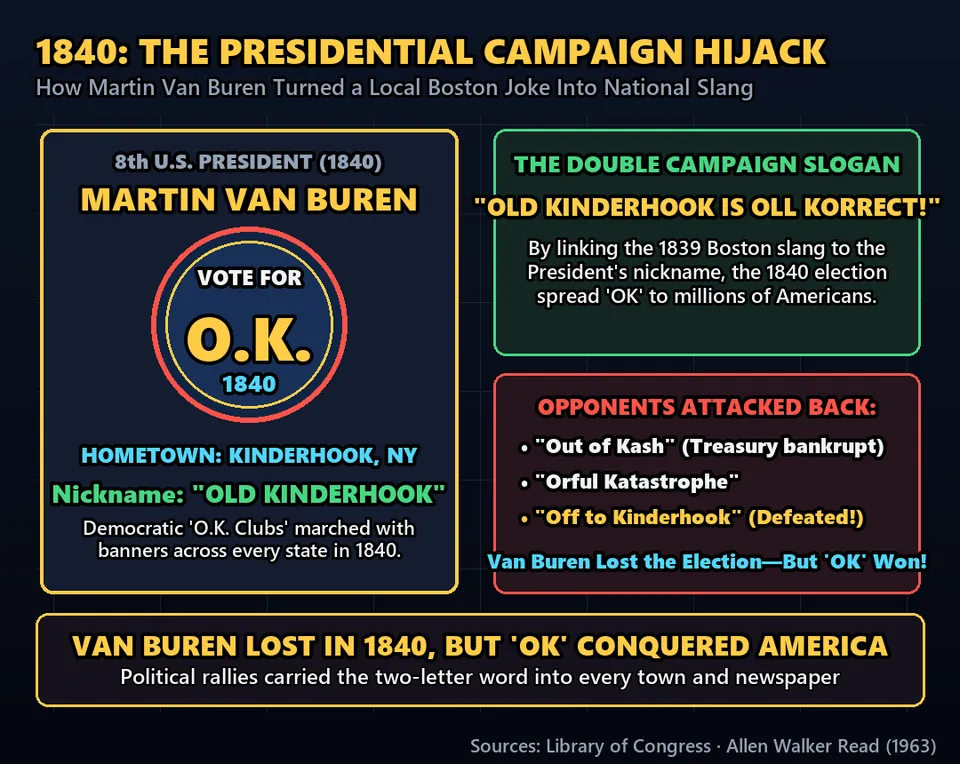
Diagram dari video

Diagram GeeGit: 'OK' is the most spoken and universally understood word on the planet. But it started as an intentional spelling joke.
“'OK' is the most spoken and universally understood word on the planet. But it started as an intentional spelling joke.”
Diagram GeeGit: The joke should have died in months. But a year later, a US presidential campaign adopted it.
“The joke should have died in months. But a year later, a US presidential campaign adopted it.”
Diagram GeeGit: Then came the electric telegraph: operators needed a quick, distinct confirmation that messages arrived safely.
“Then came the electric telegraph: operators needed a quick, distinct confirmation that messages arrived safely.”
Transkrip video (English)

'OK' is the most spoken and universally understood word on the planet. But it started as an intentional spelling joke.

In the late 1830s, young newspaper writers in Boston had a silly trend of abbreviating misspelled words.

On March 23, 1839, the Boston Morning Post printed 'O.K.' as short for 'oll korrect': all correct.

The joke should have died in months. But a year later, a US presidential campaign adopted it.

Supporters of President Martin Van Buren called him 'Old Kinderhook' and chanted 'Vote for OK!' across the country.

Then came the electric telegraph: operators needed a quick, distinct confirmation that messages arrived safely.

A nineteenth-century newspaper joke, turned into political slang, that conquered human communication forever.

Sumber

  • Dr. Allen Walker Read
  • Oxford English Dictionary
  • Allan Metcalf

Diagram digambar ulang dan disederhanakan oleh GeeGit. Narasi video: suara AI.

Masih soal Sejarah & Bahasa

Pertanyaan baru setiap hari